Pain that starts in your low back, cuts through one buttock, and runs down the back of your leg has a name and a known cause. Sciatica is pain caused by irritation or compression of your sciatic nerve, and you can feel it in your lower back, your butt, and your leg. It is a common condition that may cause pain, numbness, or tingling. Most people recover, but the road there looks different for everyone, and the first appointment is where that road gets mapped out.
I am Dr. Danny Lai, a chiropractor and acupuncturist in Oxnard. I have practiced in Ventura County for more than 30 years, and I have watched a lot of people walk in hunched over, convinced something is badly broken, and walk out with a plan. Here is exactly what happens when you come see me for sciatica and lower back pain, and why the first visit is usually the most important one.
What Sciatica and Lower Back Pain Actually Feel Like
Sciatica is not a diagnosis in the way people assume. It is a set of symptoms that points to a nerve being irritated or squeezed somewhere along its path. The typical picture includes a sharp, burning pain down the back of the leg, tingling or pins and needles, numbness, and weakness. Symptoms usually affect your bottom and the back of one leg, often including your foot and toes. They can arrive suddenly or build gradually over days.
The timeline matters too. Sciatica usually gets better in a few weeks to a few months, but it can last longer. There is also a real chance it comes back at some point. Knowing that up front is useful, because it changes how you think about treatment. The goal is not just to get you out of pain this week. It is to keep the same pattern from returning next spring.
The Honest Answer About Treatment Options
Most people recover with stretching, medication, or physical therapy. Severe cases may need surgery. That is the broad landscape, and it is worth saying plainly because it takes some of the fear out of the room. The vast majority of people sitting in my office do not need an operating table. They need a correct diagnosis, a sensible plan, and consistency.
Treatment for sciatica can include stretches, exercises, pain relief, and making changes to your lifestyle. What that looks like in practice varies from person to person. Someone whose pain flares only after long drives has a different problem than someone who cannot stand up straight in the morning. Both may technically have sciatica. Both need different care.
What Happens at Your First Visit in Oxnard
The first appointment runs longer than follow-ups because I am gathering information before I touch anything. Here is the sequence.
The Conversation Comes First
I want to know where the pain starts, where it travels, and what changes it. Does it get worse when you sit, stand, cough, or bend? Does it stay in the back, or does it reach your foot? How long has this been going on, and is this the first time or the fifth? I also ask about your work, your sleep, and how much walking you are actually doing in a normal day.
This part is not small talk. The pattern of your symptoms often tells me more than any image will, and it keeps me from chasing the wrong structure.
The Physical Exam
Then we move. During a physical exam a clinician might check muscle strength and reflexes. You may be asked to walk on your toes or your heels, rise from a squatting position, and lift your legs one at a time while lying on your back. These are simple movements, but they give a clear read on which nerve root is unhappy and how much it is affecting your strength.
I also look at how you stand and move, because the lower back rarely misbehaves on its own. Hip tightness, uneven weight bearing, and old injuries all feed into the picture.
When Imaging Makes Sense
Not everyone needs a scan on day one, and ordering one reflexively tends to create more anxiety than answers. People with severe pain, or pain that does not improve within a few weeks, may need imaging. An X-ray of the spine may reveal mechanical changes that can affect the size of the holes where the nerve roots exit the spine. An MRI can show soft tissue that an X-ray cannot. If imaging is appropriate, I will say so and explain what I am looking for before you go.
Your First Treatment
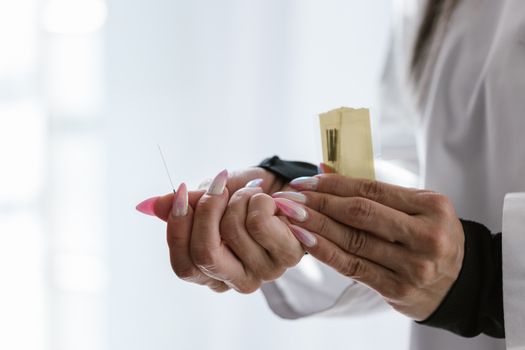
Most people get treated on the first visit. In my office that means combining chiropractic care with acupuncture rather than treating them as two separate appointments on two separate days. I am dually licensed in both, which lets me adjust the spine and then follow with needles in the same session, targeting the same problem from two directions.
Depending on what I find, a visit may also include cupping or Chinese herbal medicine. Those are tools I reach for when the presentation calls for them, not defaults I apply to everyone.
How Chiropractic and Acupuncture Work Together
These are not competing approaches. The National Institutes of Health recognizes acupuncture as a safe therapy to complement conventional treatments for sciatica and other lower back pain. Complement is the key word. Acupuncture is not a replacement for a proper exam, and an adjustment is not a replacement for addressing irritated nerve tissue. Used together in the same visit, they cover more ground than either one alone.
Practically, the adjustment works on alignment and joint motion. The needles work on the muscular tension and pain signaling around it. For a patient whose sciatica is being driven by a locked sacroiliac joint and a chronically clenched glute, that combination often makes more sense than picking one lane.
What Conventional Care Usually Includes
It helps to know the full menu, including the options your medical doctor might recommend. These are well-established categories, and most treatment plans pull from more than one.
| Category | Common examples |
|---|---|
| Medication | Anti-inflammatories, corticosteroids, antidepressants, anti-seizure medicines |
| Physical therapy | Exercise advice and manual therapy techniques such as massage |
| Injections and procedures | Steroid injections, nerve blocks, aquatic therapy |
| Self-care | Stretching, exercise, heat and ice, lifestyle changes |
| Surgery | Reserved for severe cases |
None of these are wrong. The question is which combination fits your situation, and that is exactly what the first visit is designed to answer.

What You Can Do at Home While You Wait for Your Appointment
You do not have to be passive before your visit. A few basics are supported by mainstream guidance and are safe for most people.
- Apply an ice pack wrapped in a thin towel to the painful area for 15 to 20 minutes several times a day.
- After the first few days, switch to heat if that feels better to you.
- Rest for a short time, but not for days on end. Prolonged bed rest tends to make backs stiffer, not better.
- Try gentle movements such as the cat-cow pose, a bridge, or the quadruped arm and leg raise.
- Keep moving within your tolerance. Walks count.
If a movement makes the pain sharper or sends it further down your leg, stop and note it. That reaction is useful information for me at your exam.
How to Prepare for Your First Appointment
A little preparation makes the visit more productive.
- Write down when the pain started and what you were doing at the time.
- Note which positions make it better and which make it worse.
- Bring a list of your current medications and supplements.
- Bring any recent imaging reports or notes from other providers.
- Wear comfortable clothing you can move in.
If you have already seen a physician, physical therapist, or another chiropractor, bring that history. It saves time and prevents me from repeating tests you have already had.

What Recovery Usually Looks Like
Most people improve. Not always on the schedule they want, and not always in a straight line, but the trajectory is generally favorable. Sciatica usually settles over weeks to a few months, and severe cases that need surgery are the exception rather than the rule.
What I ask of patients is patience with the process and honesty about what is happening between visits. If something is not working, I want to know sooner rather than later so we can change course.
Frequently Asked Questions
Does sciatic nerve pain go away?
For most people, yes. Sciatica usually gets better in a few weeks to a few months, though it can last longer in some cases. Most people recover with stretching, medication, or physical therapy, while severe cases may need surgery. It is also possible for sciatica to come back at some point, which is why building strength and mobility matters as much as getting out of pain.
What can I do to ease sciatic nerve pain at home?
Start with an ice pack wrapped in a thin towel for 15 to 20 minutes several times a day, then switch to heat after the first few days if it helps. Rest briefly rather than for days. Gentle movements like cat-cow, bridges, and quadruped arm and leg raises are commonly recommended. If pain worsens or travels further down your leg, stop and get evaluated.
Is it better to sit or stand with sciatica?
There is no single answer that fits everyone, because it depends on which nerve root is irritated and what position relieves pressure for you. What the evidence does support is avoiding long stretches in any one position and keeping rest periods brief. Notice which posture eases your symptoms, and bring that observation to your first appointment so it can guide the exam.
Why does sciatica cause buttock pain?
Because the sciatic nerve travels right through that region on its way down the leg. Sciatica is pain caused by irritation or compression of the sciatic nerve, and you can feel it in your lower back, butt, and leg. Symptoms usually affect your bottom and the back of one leg, often including your foot and toes, which is why the pain seems to travel rather than stay put.
How does acupuncture fit into treatment for sciatica and lower back pain?
The National Institutes of Health recognizes acupuncture as a safe therapy to complement conventional treatments for sciatica and other lower back pain. In my Oxnard practice, it is delivered in the same visit as chiropractic care rather than as a separate course of treatment. That combined approach is the core of what I do, and it is worth asking any provider how they sequence the two.