When your lower back aches and pain travels down one leg, exercise can feel like the last thing you should do. It seems safer to lie still and wait for things to settle. In practice, gentle movement is usually part of the way out of that pain rather than the cause of it, and a routine short enough to finish in ten minutes is far easier to repeat than a long one you start dreading.
This routine pulls together movements that show up repeatedly in sciatica and lower back pain programs: pelvic tilts, dead bugs, bird dogs, planks and side planks, abdominal bracing, a figure-four stretch, and a gentle yoga pose. Nothing here requires equipment or a gym. What matters is doing a small amount often, and knowing which signals mean stop.
What Sciatica Actually Is
Sciatica is a blanket term for pain that originates from the sciatic nerve, the longest nerve in the body, which runs from the lower back down through the leg. Because the symptoms follow a nerve, they tend to travel. Pain, numbness, tingling, and weakness can shoot through the leg rather than staying put in the back.
Some sources report that up to 40 percent of Americans deal with sciatica at one point or another. That number alone explains why so many exercise sequences exist. The exercises that tend to help are the ones that calm the nerve and support the spine, not the ones that crank the lower back into its end ranges.
Why Ten Minutes a Day Is Worth Doing
Clinicians routinely hand patients a small handful of exercises for lower back pain and sciatica, sometimes as few as three, and published programs often group nine or more into a single sequence. A ten-minute routine sits comfortably in the middle. It is long enough to work the core, the hips, and the lower back, and short enough that a busy day does not knock it off the schedule.
Consistency does more for you than volume. A short session most days gives the spine and the irritated nerve regular, gentle input, which is the goal. One long session a week does not offer the same repetition, and it is much easier to abandon after a flare-up.
Keep every movement gentle and small
These are not performance exercises. Range of motion should stay comfortable, and speed should stay slow enough that you can feel what is happening. If a movement demands a big effort or a deep stretch, shrink it until it feels manageable. Small, controlled reps done consistently beat ambitious reps done once.
Watch for symptoms that travel farther
The clearest sign a movement is too much is when pain, numbness, or tingling spreads farther down the leg than it started. That is a reason to stop that movement, not push through it. Discomfort that stays local and eases when you finish is a different story and usually fine.

The Four Core Exercises: Pelvic Tilts, Dead Bugs, Bird Dogs, and Planks
These four are described in exercise guidance as essential to alleviating sciatic nerve pain, and they form the backbone of the routine below. They share a theme: they teach the trunk to hold the spine steady while the arms and legs move.
Pelvic tilts
Lie on your back with your knees bent and your feet flat on the floor. Flatten your lower back against the floor by tightening your core muscles, then release and repeat. This is the gentlest of the group and a good way to start, especially on a day when the back feels irritable. It also works as a reset between the other movements.
Dead bugs
Dead bugs keep the lower back supported while the limbs move. Lie on your back with your knees bent and lifted and your arms raised. Slowly lower one arm and the opposite leg while your lower back stays pressed down, then return and switch sides. If the back lifts off the floor, shorten the reach until it stays flat.
Bird dogs
Bird dogs work the same idea from the opposite position. Start on your hands and knees, then extend one arm and the opposite leg while your trunk stays level. Return, switch sides, and keep the movement slow. Rocking the hips side to side means the reach is too far, so bring it in.
Planks and side planks
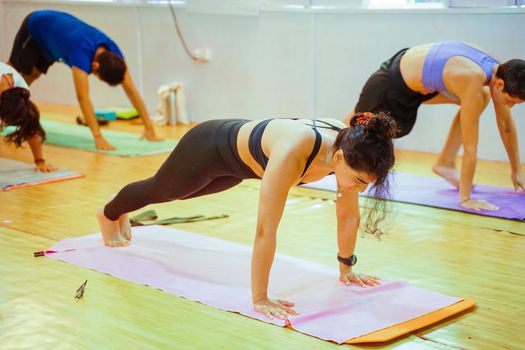
Core work for lower back pain commonly progresses through abdominal bracing, then planks, then a side plank on the knee, and finally a full side plank. Work through that order at whatever pace suits you and stop at the level you can hold with good form. Bracing first is not a warm-up formality; it teaches the trunk to switch on.
The Stretches That Round Out the Ten Minutes
Two stretching options soften the routine so it does not end on a contraction. Both are easy to do on the floor with no props.
Figure-four stretch
Lie on your back with your knees bent. Cross one ankle over the opposite knee, then gently pull the lower knee toward your chest. Maintain the position for 20 to 30 seconds, then switch sides. Keep the pull gentle. This is a stretch, not a test of how much you can tolerate.
A gentle yoga pose
Gentle yoga poses appear in nine-exercise sciatica programs as a way to finish a session without loading the spine. The word doing the work there is gentle. Choose a shape you can hold comfortably, breathe in, and come out of without a struggle. If you are unsure which pose suits your back, ask a clinician who knows your history.
A Ten-Minute Sequence You Can Follow
Run through these in order and divide the ten minutes however you like. On a rough day, spend most of the time on the first two steps and skip the planks. On a good day, add time to the strength work.
| Order | Movement | Role in the routine |
|---|---|---|
| 1 | Abdominal bracing | Teaches the trunk to switch on before anything loads |
| 2 | Pelvic tilts | Gentle start and a reset between movements |
| 3 | Dead bugs | Core control with the back supported on the floor |
| 4 | Bird dogs | Same control challenge from hands and knees |
| 5 | Plank, then side plank on knee | Builds on bracing and progresses at your pace |
| 6 | Figure-four stretch | Hold 20 to 30 seconds per side |
| 7 | Gentle yoga pose | Calm finish |
If ten minutes feels like too much some days, cut it to the pelvic tilts and the figure-four stretch. Showing up at all keeps the habit alive, and the habit is what carries you through the weeks when progress feels slow.
What to Do When Pain Flares
A flare is not proof the routine failed. It usually means something was too much, too soon, or that the nerve is simply irritated that day. Back off to the smallest version of each movement, keep the session short, and give it a few days before building again.
Some situations call for an evaluation before you start rather than after. Severe pain, symptoms that keep worsening, or numbness and weakness in the leg are reasons to have someone look at your back rather than work through a checklist at home. If you are unsure whether these exercises suit your situation, ask before you begin.

Where Chiropractic and Acupuncture Fit In
Home exercises and hands-on care can work together. The exercises keep the spine moving between visits, and treatment aims to calm things down so movement is easier. That is the model at Chiropuncture Inc., the Oxnard, CA practice of Dr. Danny Lai, DC, LAc, a dually licensed chiropractor and acupuncturist with more than 30 years of experience in Ventura County. The practice combines chiropractic adjustments and acupuncture into a single integrated approach.
Sciatica, back and neck pain, pinched nerves, and herniated discs are among the conditions the practice treats, alongside headaches, hand and foot pain, and auto injuries. Care options also include Chinese herbal medicine, cupping, hyperbaric oxygen therapy, hypnosis, and Mental Emotional Release. If you are in the Oxnard or greater Ventura County area and want to know how a home routine fits with treatment, contact the office to talk through your case.
Frequently Asked Questions
What exercises can I do with sciatica?
Pelvic tilts, dead bugs, bird dogs, and planks are commonly recommended for sciatic nerve pain, and exercise programs often add abdominal bracing, a side plank on the knee, a figure-four stretch, and gentle yoga poses. The best starting point is the gentlest option you can do without symptoms traveling farther down your leg, then build from there.
What is the fastest way to cure sciatica?
There is no single fastest fix, and anyone promising one is guessing about your back. What the exercise guidance supports is a consistent, gentle routine built around core control and a few stretches. Timelines vary widely from person to person, so if symptoms are severe or getting worse, get evaluated rather than waiting it out at home.
Does heat or ice help sciatica?
The exercise sources reviewed here do not settle that question, and the honest answer is that it varies from person to person. Some people find one or the other soothing. If you want to test it, try one at a time, note how your leg feels afterward, and mention the results when you next speak with a clinician.
How often should I do these exercises?
Most people do best with a short session most days rather than one long session each week. Ten minutes is enough to work the core, hips, and lower back without wearing yourself out. On a painful day, scale back to pelvic tilts and the figure-four stretch, and skip the planks until things settle.